

PENSACOLA, Fla., (July 15, 2023) – The Battle of Gettysburg was the single biggest and bloodiest battle of the Civil War, but its story goes far beyond mere statistics.
One day after Union Gen. George Meade cleaned Confederate Gen. Robert E. Lee’s clock, Union Gen. Ulysses Grant flattened the hopes of Confederate Gen. John C. Pemberton by capturing Pemberton’s entire army when he took the Confederate bastion of Vicksburg. These back-to-back twin victories in early July of 1863 were the fulcrum point the Civil War turned on. With only the major exception of the Confederate victory at Chickamauga later in 1863, the rebels never mounted a successful campaign of any sort again—and began losing battle after battle over the next two years.
Hindsight makes it easy for us to see this in 2023. In 1863, the war was still raging, victory still elusive, and disaster still a looming threat to both sides.
My first journey to Gettysburg was in March of 1993. I was a junior at Florida State University, and a total Navy/World War II nut back then. I was invited on a Spring Break Civil War road trip by a buddy in my dorm who had a passion for the Civil War. We built in some stops at Navy sites for me (Patriot’s Point in South Carolina, the battleship North Carolina in, well, North Carolina, etc.), but I was happy to mostly let Jeff ‘drive the train,’ as it were.
I’d always had this weird aversion to Civil War history prior to this 1993 adventure. My lifelong reverence for President Lincoln was the only exception, but the Civil War itself was a story that just… I don’t know. There was a ‘wall’ in my head pushing me away.
Jeff and I hit the Petersburg battlefield in Virginia on March 22, 1993. In the Confederate cemetery we found the grave an Austin Peay Lyles. The grave was broken; a tree growing into the grave and the stone itself leaned against the tree. I can’t tell you exactly what or how, but something about Lyles’ grave shattered that mental wall with irrevocable force. It was like being blind and suddenly being able to see—a whole new world literally just appeared in front of me.
Jeff and I were supposed to visit Manassas for the Bull Run battlefields, but at the last minute, he suggested the mythic fields of Gettysburg. I’d heard about the battle, of course, but I knew nothing except it was the most famous battle of the war.
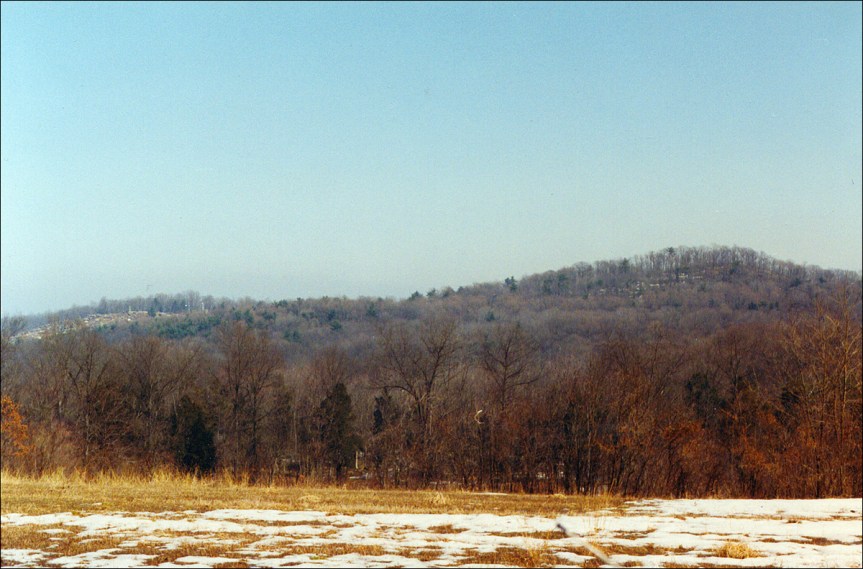
We arrived for a whirlwind, one-day tour on March 26, 1993—ironically, only a few months before the 130th anniversary of the fight. I mentioned turning points earlier; well, Petersburg and Gettysburg were the major turning point for me, but, at the time, I couldn’t see it anymore than President Lincoln or General Grant could see that Gettysburg and Vicksburg presaged the eventual Union victory. Now that thirty years have passed I can see how the course of my life shifted. I attended the 150th anniversary in 2013, and just got done seeing the 160th.
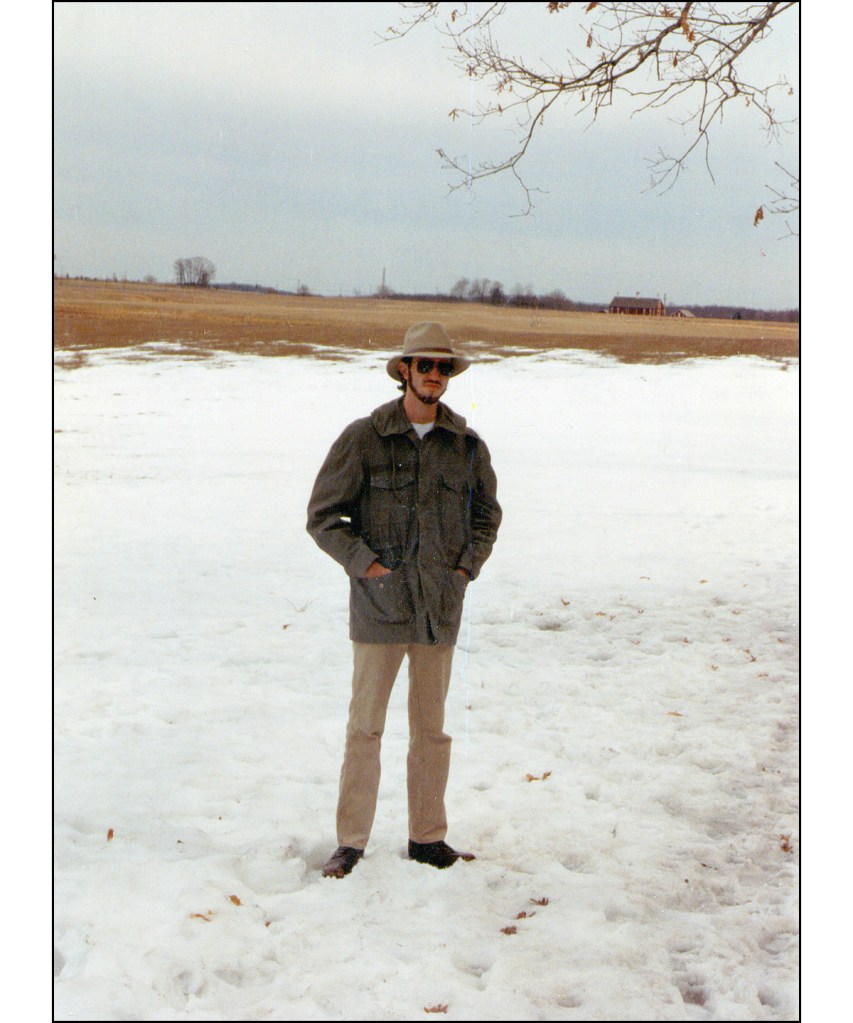
I don’t even have a photo of me at Gettysburg from 1993. I only had two photos of me taken on that trip, one at Patriot’s Point and one aboard the North Carolina. (Remember, my young padawans—this was in the days of wet film. We only had so many exposures to use, and we had to pay for the film to be developed and the prints made.) The first photo of me at Gettysburg was taken March 25, 1994—spring break of my senior year. That time, I’d decided to make the road trip, and managed to score a driving buddy in my friend, Les.
I’ve been visiting Gettysburg pretty regularly for 30 years now. My photography is a form of diary, and it’s interesting to see just how my perceptions and interests at Gettysburg shifted over the years. When I first visited, I was a college kid who, like many Southern kids, was enamored with the South and the fatuous ‘Lost Cause’ mythology. I admired Lincoln and was glad the North won, but my heart soared at the cracking tales of Robert E. Lee’s mighty Army of Northern Virginia (ANV). The ANV’s heroic stands against an army that only won by sheer weight of numbers thrown into a meat grinder inspired me to no end. I spent most of my time along the Southern lines, photographing Southern monuments.

Somewhere between 1993 and 2023 my entire opinion changed. I’ve completed a military career of my own, I’ve done a master’s in Civil War history (my thesis was on John Brown). I’ve read and re-read and re-re-read numerous books by such luminaries as Shelby Foote, Stephen W. Sears, and Edward H. Bonekemper III.
Lee is known as the great gentleman who fought nobly for a losing cause, Grant as a drunken butcher who only won by using sheer numbers to overwhelm his enemies. This is FALSE.
Lee was a gracious man, yes, but he was the butcher. He never learned the lesson that led George Washington to victory (thank God!). Washington realized after the Battle of New York he couldn’t hope to defeat the British in open combat, so he swallowed his pride and began a war of attrition. , Washington drained the British until they capitulated by keeping his army intact. Lee never got that humility check; despite his reputation for winning by staying on the defensive, he was actually quite aggressive, sacrificing men he couldn’t afford to lose in great attempts to dramatically win the war. The ‘audacious’ was used to describe him in glowing terms when he took command of the ANV in 1862. That audacity did more to lose the war than nearly anything else.
Grant would sometimes vomit at the sight of blood and could not stand to hear the cries of wounded, so he was laser-focused on winning with as little death as possible. He won a number of campaigns—most famously Vicksburg—by literally outmaneuvering his foes.

According to Grant and Lee by Bonekemper III, Lee lost far more men per capita than Grant ever did—and that includes the year Grant had to continually batter Lee’s army. You see, Grant knew that the war would only be won by destroying the enemy armies, not taking enemy territory, but he did his level best to minimize any necessary fighting. General Washington learned this early during the Revolution, and thereby denied the British a victory by keeping his army intact to always fight another day. Lee apparently never got the memo, and so he was clocked first by George Meade, and then by Ulysses Grant.
Following Gettysburg, Lee simply did not have the manpower to do anything anymore but put up a doomed holding action delaying the inevitable.
My, my! How my opinions changed once I was in the Navy and had to lead sailors myself while studying history for what it was, not what the mythologizers wanted us to believe about the South.
I now spend more time along the Union lines now, especially as I’ve come to understand and appreciate just how damned hard Gen. George Meade worked to win the battle. Gen. Meade was all over the place, keeping personal control of the field. Lee gave orders, but then retired to a single spot to watch the action while relinquishing control of the action to his subordinate commanders. Lee was a great leader, but a lousy general.
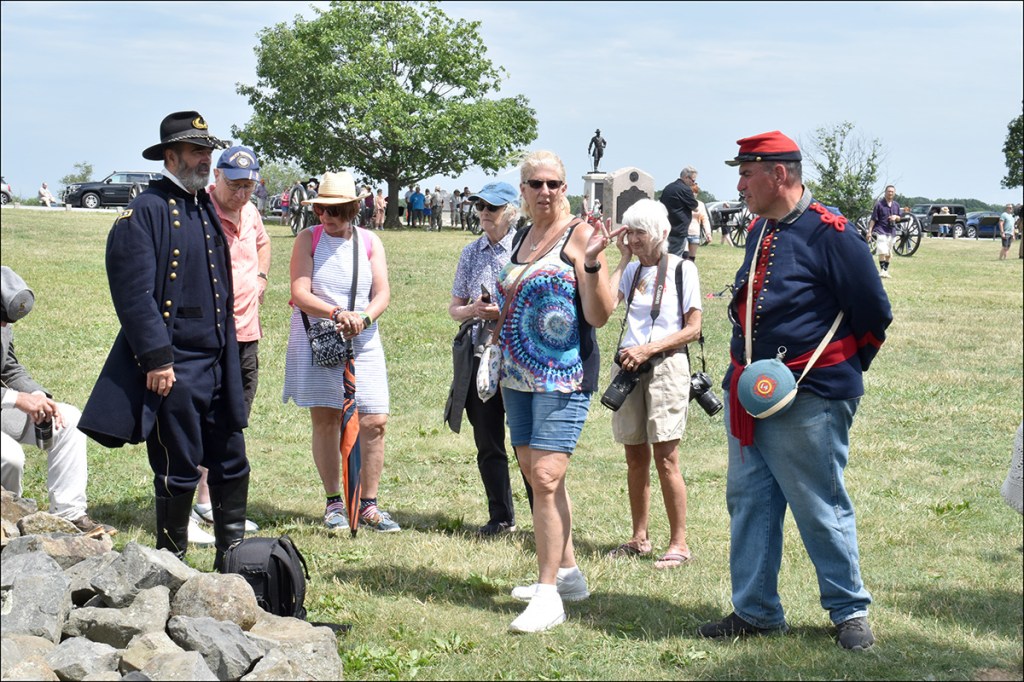
I’ve also seen another change in myself. I rarely photograph monuments anymore—not unless I’m doing it to show their interaction with other visitors. I find myself spending more time in town studying the horrible urban fighting that decimated Gettysburg for decades. I find a deeper interest learning the human stories of the civilians trampled over by great armies, and of individual soldiers trying to survive a battle too big for them to understand by any terms except, “That’s the enemy over there…and over there, and over there…”
There are still great heroes and bloody tragedies here—stories of human greed, human cowardice, human compassion, human courage, and human triumph—to keep one engrossed for a lifetime. A visitor can spend their entire time studying the bloody pageant of the battle itself, or focus on certain unique stories, such as Union Gen. Greene’s successful defense of Culp’s Hill during horrific night fighting. A guest can immerse themselves in the minutia of civilian life in the 1860s, or learn about Civil War battlefield medicine and how it evolved into our top-notch care today.
There’s nothing wrong or shameful in changing one’s opinions as we grow older and wiser; shame comes from being so rigid one never even considers new ideas. My journey at Gettysburg is a microcosm of this principle. I’ve told friends and companions the same story over the years—after all, the battle happened how it happened, and it’s over. However, the approach I take, the perspective I focus on, and my opinion of the commanders, men, and women involved have evolved significantly over the past 30 years.
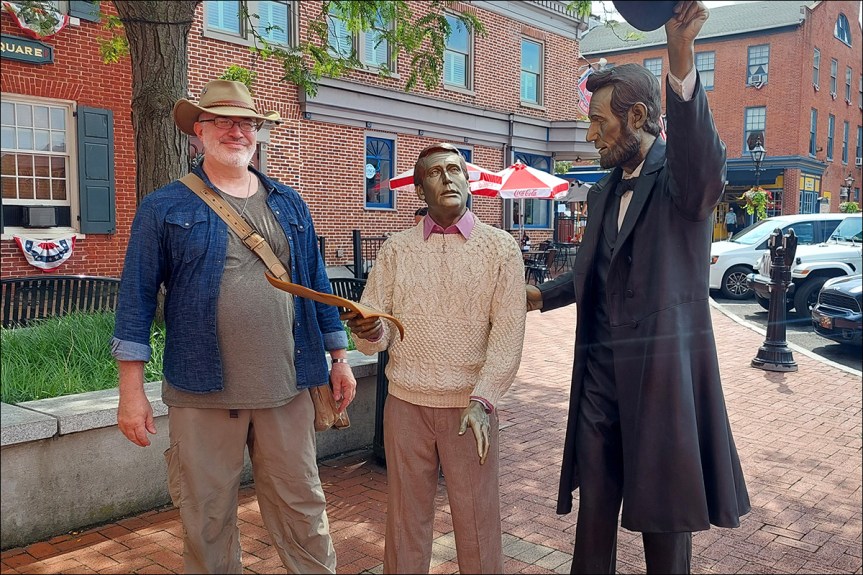
We go to the movies for sex, drugs, and rock’n’roll. Well, read a good history book—one that tells history as a story full of great deeds, noble aspirations, horrific crimes, heroic people, and despicable villains—and you’ll find that “sex, drugs, and rock’n’roll” really did happen, and are happening today. Learning to see the adventure story in our past opens up grand new vistas of ideas and concepts while also helping us understand the questions we still wrestle with today. Traveling is an excellent way to both experience new joys and adventures, and to expose oneself to new ideas that could change the course of a life.
The Civil War was, at heart, a contest over human freedom. We still debate what ‘human freedom’ means today. My own understanding of this issue has grown, interestingly enough, in direct relation to my understanding of the Battle of Gettysburg. In a way, this journey I’m on has been 160 + 30 years in the writing…and the story is not over yet!
Check out my video of this visit at: https://youtu.be/aurCdbvPoDQ
###
#nathanaelmiller, #sparks1524, #Florida, #GulfCoast, #Pensacola, #Gettysburg, #CivilWar, #AmericanCivilWar, #AbrahamLincoln, #PresidentLincoln, #RobertELee, #GeorgeMeade, #Pennyslvania, #Union, #Confederate,
 Sparks1524