


FORT WALTON BEACH, Fla., (Oct. 9, 2023) –Speeding automobiles daily whoosh past a serene relic from the first civilizations to inhabit the area—the Fort Walton Beach Indian Temple Mound.
The Indian Temple Mound and Indian Temple Mound Museum are the centerpieces of the City of Fort Walton Beach Heritage Park & Cultural Center, a gathering of historic structures and stories at the site where Fort Walton Beach quite literally began.
The first people to settle by what we today call Choctawhatchee Bay were the ancients of the Deptford Culture who resided here over 1,200 years ago. The disappearance of the Deptford civilization remains a mystery, but the mound they left was again utilized as a ceremonial and government center when the Pensacola culture (a variation of the Mississippian culture) settled on the site about 1,000 years ago.
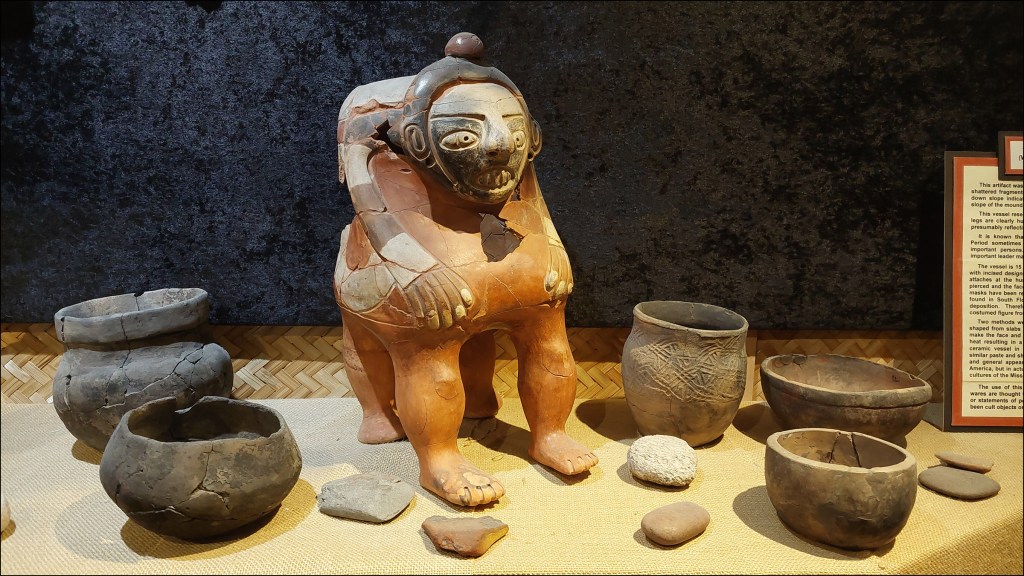
The residents used the mound as the site of a temple and the residence of the chief. Each generation buried elites in the mound, raising it ever higher. Today, a 12-foot high mound of earth seems like nothing since we have hydraulic excavators which can move tons of earth in one go. However, building such a structure by hand in antiquity was a work the entire community engaged in.
Something happened to the mound builders that caused them to leave, and the ‘something happened’ was not European settlement. When the Spanish first set foot in the modern Fort Walton Beach area in 1513, the mound was silent, the site abandoned. It’s possible the Spanish didn’t even know the mound was anything but a natural hillock along the sandy coastline.
The mound sat forlorn until the Civil War sparked interest in the area. The Walton Guards, a Confederate unit, set up Camp Walton at the base of the mound. Armed with a couple of ridiculously inadequate 18-pound smooth-bore cannons, the men of Camp Walton spent their time digging into the odd hill of earth and finding the oddest artifacts, all the while standing ready to repel a Union invasion.
The Walton Guards were sent north in 1862 to join other Confederate units in such battles as the late-1863 Confederate victory at Chickamauga. Before leaving, the guards spiked their cannons, burying them in the mound to ensure the hated Yankees never got them.

Camp Walton survived as a small fishing and logging community following the Civil War. The commercial viability of the whole region was bound to attract development, and it certainly did.
The growing population required the standard services of a settled hamlet. The first to appear was the Camp Walton Schoolhouse. Built in 1911 and opening in 1912, the one-room building was the first school building in the area. A second room was later added to accommodate the growing high school population.
The Garnier Post Office was opened along Garnier Bayou’s shores in 1918 after World War I to handle the increasing flow of mail to the community.
Today, the City of Fort Walton Beach Heritage Park & Cultural Center preserves the stories of this history right where it literally started—at the Indian Temple Mound along modern Highway 98. The Indian Temple Mound’s collection reveals the ghost of the Deptford people’s story, while providing greater detail on the more recent Pensacola variant of the Mississippi Culture.
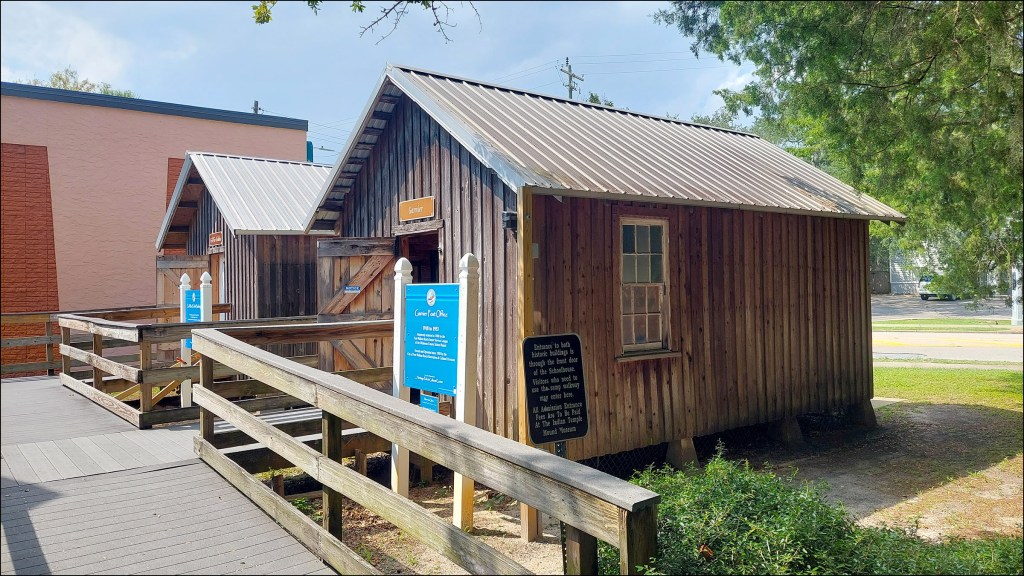
Not content with merely preserving and interpreting the mound, the City of Fort Walton Beach decided to turn the whole area into a true heritage park. The Camp Walton Schoolhouse and Garnier Post Office buildings were relocated to the site. A small, period-accurate Civil War building was constructed to share the history of the Walton Guards and Camp Walton. Finally, one of the Walton Guard’s original cannons, unearthed during excavations on the mound, sits on display where, over 160 years ago, it was deployed to repel a Yankee invasion that never came.
The exterior of the site is open daylight to dusk. Visitors can stroll in and admire the quaint simplicity of the school and Post Office buildings and climb the mound’s observation deck to contemplate the people who built it…or just enjoy a late Florida afternoon.
The museum and interior exhibits in the school and Post Office are all covered under one admission fee paid for in the museum’s gift shop. This is not a huge museum one must plan for as if laying out a military invasion. A leisurely morning (or afternoon) can be spent seeing all the exhibits without feeling rushed.
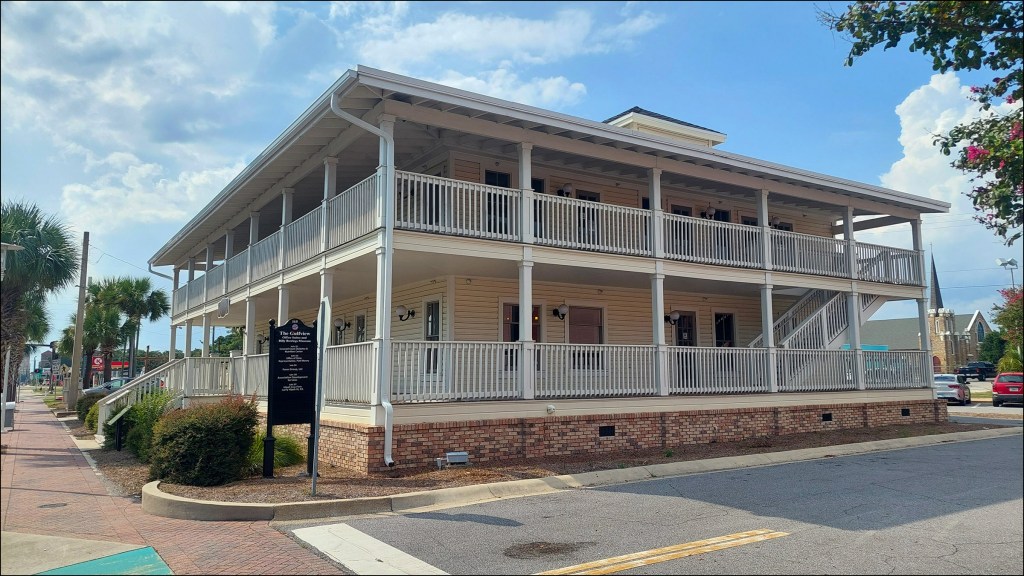
A final coda to a visit should include a brief stroll over to the 1906 Gulfview Hotel. Although not part of the City of Fort Walton Beach Heritage Park & Cultural Center, the Gulfview Hotel was moved from its original location to its new home next to the park. The oldest surviving modern building in Fort Walton Beach, today the structure houses the Fort Walton Beach visitors center on its ground floor, while its upper level contains private offices.
Every town and city has a place ‘where it all began.’ While the greater Fort Walton Beach area has numerous communities that all grew into one small metro area, the City of Fort Walton Beach itself proudly protects this space where its story took off. Food, access to fresh water, a generally even warm climate, and a protected bay drew the original Deptford people here—those same resources continue to draw people to the same place.
And it all began at the Fort Walton Beach Indian Temple Mound.
** ** **
City of Fort Walton Beach Heritage Park: https://www.fwb.org/parksrec/page/heritage-park-cultural-center
Check out my video at:###
#nathanaelmiller, #sparks1524, #travellog, #travelog, #templemound, #Florida, #GulfCoast, #IndianMound, #IndianTempleMound, #museum, #museums, #CivilWar, #Confederate, #postoffice, #oneroomschool, #school, #historicbuilding,
 Sparks1524